Springs Spas
Sohna Sulphur Springs
Natural sulphur springs in the small hill town of Sohna, used medicinally for over 400 years.
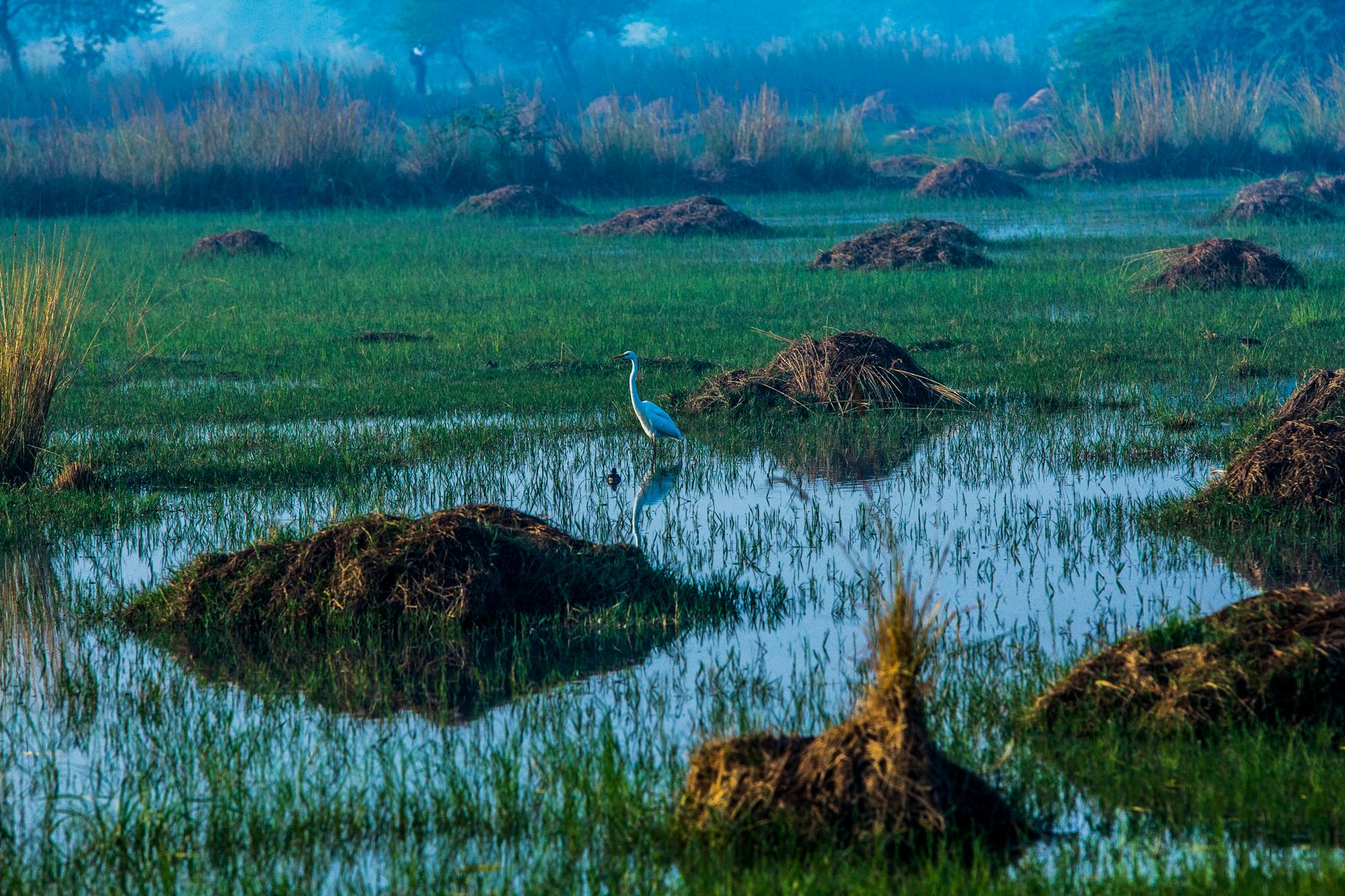
Sohna, twenty-five kilometres south of Gurugram along the Sohna Road, is best known for its natural sulphur springs — one of the very few hot spring sites in the plains of North India. The water emerges at around 40°C from a fault at the base of the Aravalli hills and has been used for skin ailments and rheumatism for at least four centuries. A small municipal bathing complex enclosed the main spring in the 1970s, and it operates today as a modest but genuine hot-water bath rather than a spa.
The complex has two enclosed pools — one for men, one for women — fed by the natural spring. The water is warm rather than hot, and the strong sulphur smell is the point. There is no landscaping or spa treatment: this is a functional bath house, not a wellness resort. The temple of Shiva at the top of the adjacent hillock, and a small mosque and the ruins of a Mughal-era pavilion around the spring, give the site a lived-in old-town feel. A dhaba at the entrance sells tea and paratha.
Come on a weekday morning between 7 and 10am — locals use the pools earliest and it is calmest then. Bring your own towel and a change of clothes; a locker is ₹20 and a private cubicle ₹50. Combine with a drive up the Sohna hill to the Chandra Mahal (now a hotel) for a proper view back across the plains, and lunch on the way back at a Sohna Road cafe. This is a curiosity trip, not a full-day outing — allow two hours.
The drive is the real logistics problem, not the bath. From Rajiv Chowk on NH-48 you head south on Sohna Road (NH-248A); the elevated corridor past Subhash Chowk to Badshahpur, opened in 2022, removes the worst of the old crawl, after which the widened highway runs through Ghamroj and Bhondsi into Sohna town — twenty-five kilometres in all. Reckon on 45 minutes if you leave before 8am, and 75 to 90 minutes if you set off mid-morning, when Alwar-bound trucks and traffic feeding the Delhi-Mumbai Expressway interchange choke the last few kilometres. App cabs quote roughly ₹600-900 one way, but the sensible arrangement is a local taxi held for the round trip with two hours of waiting, because finding a ride back from Sohna Chowk on demand is unreliable. Parking is free on the roadside by the compound gate. The nearest metro, Millennium City Centre, is still 22 km short.
Costs are trivial next to the car. Entry is ₹100 per person, paid in cash at the window by the gate — there is no card machine, no online ticket and no combined pass. A locker is ₹20 and a private cubicle ₹50, so two people bathing with one cubicle and one locker spend about ₹270. Nothing inside costs extra: no towel hire, no attendant charge, no guide, no audio commentary, and the Shiva temple above takes only whatever coin you choose to leave. At the dhaba by the entrance, chai runs ₹15-20 and an aloo paratha with curd and pickle ₹50-70, so lunch for two stays under ₹200. The taxi, at ₹1,800-2,500 return, is eighty-five per cent of the day. Split it three or four ways and this becomes one of the cheapest half-days out of Gurugram.
Timing decides whether this is charming or grim. The gates open at 6:00 and the first two hours belong to Sohna residents; between 7 and 10am on a weekday you may have half the tank to yourself. Sundays fill by 9am with whole families, and by midday the water looks cloudy. Monday mornings and Mahashivratri, in February or March, bring temple crowds that spill down into the bathing compound. Seasonally, October to March is the point of the exercise — a 40°C soak on a 6°C January morning is the one time the trip makes perfect sense. April to June, with 43°C outside, makes a warm bath pointless. July to September brings mud underfoot and the occasional day-long closure for draining and scrubbing. In late December and January, leave Gurugram after 9am so the fog on the two-lane stretch has lifted.
It suits curious long-term residents, anyone with an interest in the Aravalli fault and the history of the town, and drivers already heading south. It suits nobody who wants a swim: the tanks are shallow enclosed baths with no lifeguard and no shallow end, so small children need a hand on them the whole time. Steps into the water are worn stone with no handrail and the surround is permanently wet, which rules the site out for wheelchair users and makes it awkward for anyone with unsteady knees; the climb to the Shiva temple is five minutes of uneven steps with nothing to hold. Teenagers expecting a photogenic spa will be bored inside ten minutes. Skip it on a rainy afternoon — the compound is open and turns to mud — and skip it entirely if you have an hour before a flight, since IGI is 55-60 km and ninety minutes away.
Build the half-day around the drive. Damdama Lake is 12 km north-east on the Sohna-Damdama road, twenty-five minutes, and even when boating is suspended the reservoir under the Aravalli ridge is worth thirty minutes of standing about. Bhondsi Nature Camp, run by the forest department, sits 12 km back towards Gurugram just off Sohna Road and gives you a proper hill walk before the bath rather than after it. The Westin Sohna Resort & Spa is about ten minutes from the springs and is the deliberate contrast — a full-price spa treatment after a ₹100 municipal soak is the joke of the day out, and it also solves lunch. Sohna Chowk and the old bazaar around it are a twenty-minute wander for jalebi and hardware shops. Do the springs first, at opening, and everything else afterwards.
Be clear about what the phrase hot springs is doing here. The water is warm, roughly 35-40°C, not scalding, and this is nothing like Manikaran or Vashisht in the hills; photographs of turquoise landscaped pools attached to Sohna online almost always belong to a resort somewhere else. The tiling is worn, the paint peels, litter collects at the edges of the compound and the changing space is a concrete cubicle with a bolt. The medicinal reputation is four centuries of folk tradition rather than medicine, the water is not for drinking, and anyone with open wounds or a heart condition should give a hot soak a miss. The smell stays in your hair and clothes for most of a day, so pack shampoo for later and a plastic bag for the wet things. Come for the oddity and the age of the place, and the ₹100 buys exactly what it promises.
Hours & entry
Not free
Mon-Sun 6:00-18:00
What to see
{'what': 'The main sulphur pool bath', 'where': 'Central enclosed bath house'}
{'what': 'Shiva temple on the hillock', 'where': 'Immediately above the springs, 5 min walk up'}
{'what': 'Mughal pavilion ruins', 'where': 'West of the spring compound'}
Tips from the ground
Weekday mornings 7-10am are the least crowded time.
Bring your own towel and slip-ons; nothing is provided.
Combine with a drive up to the Sohna hilltop for the view.
Good to know
Questions, answered
How much is entry?
₹100 for the pool; locker ₹20, private cubicle ₹50 extra. That is per person, cash only at the window by the gate — there is no card machine and no online ticket. Two people with a locker and one cubicle come to roughly ₹270, and nothing inside costs more: no towel hire, no guide, no attendant fee. The real expense is the car. A return taxi from Gurugram with two hours of waiting runs ₹1,800-2,500, so the bath itself is under a tenth of the day.
Any free access?
No, the complex charges a flat entry fee. There is no free hour, no resident rate and no discount window — ₹100 applies whenever you turn up between 6:00 and 18:00. What costs nothing is everything around the tanks: the Shiva temple on the hillock above, the Mughal pavilion ruins to the west, the small mosque and the walk through Sohna's old bazaar. If the setting interests you more than the soak, you can see all of that, take the hill view and drive home without buying a ticket at all.
How long should I plan?
Two hours including the drive up to the hillside temple. In practice that is 30-40 minutes in the water, 15 minutes changing, 20 minutes up and down to the Shiva temple and half an hour over chai and paratha at the dhaba by the gate. Add 45-90 minutes each way on Sohna Road and it becomes a half-day out of Gurugram rather than a quick errand. Folding in Damdama Lake or lunch at a Sohna Road hotel on the way back stretches it to a comfortable five hours.
Any closed days?
Open every day; occasional monsoon closures for pool cleaning. Between July and September heavy rain can shut the tanks for a day or two while they are drained and scrubbed, and the compound floor turns to mud in the meantime. Nothing is published in advance, so avoid the days straight after a downpour. Monday mornings and Mahashivratri in February or March bring temple crowds into the same compound. October to March is the dependable stretch, and a warm soak on a 6°C January morning is this place at its best.
Do I need to book?
No booking — walk in at the ticket window. There are no time slots, no capacity limit and no group rate to arrange, so a phone call gains you nothing. Carry small notes, because change for larger denominations is not always available at the counter. If you want one of the handful of private cubicles on a Sunday, arrive before 9am, since they go before the water gets busy. Bring your own towel, slip-ons, soap for afterwards and a plastic bag for wet, sulphur-smelling clothes.
How do I get there?
No metro or bus for day trips — take a taxi from Gurugram via Sohna Road, 25 km, 45 minutes. The route is NH-248A south from Rajiv Chowk, elevated as far as Badshahpur, then through Ghamroj and Bhondsi into Sohna town. Leave before 8am or after 11am to miss the truck traffic near the Delhi-Mumbai Expressway interchange. The nearest metro, Millennium City Centre, is still 22 km short. Haryana Roadways buses on the Gurugram-Nuh-Alwar route stop at Sohna Chowk, but the return is unpredictable — keep your taxi waiting.
Doing good is the business: every booking through Stay Gurugram funds one verified tonne of carbon removal — same room, same price, no markup.
Start your search